Discover the Elegance of Solomon’s Seal Plant
In the world of botany, there are few plants as enchanting and graceful as the Solomon’s Seal plant. With its delicate arching stems and elegant white bell-shaped flowers, this unique plant is a true sight to behold in any garden or natural setting.
The Solomon’s Seal plant, also known by its scientific name Polygonatum, is a perennial herb that belongs to the Asparagaceae family. It is native to Europe, Asia, and North America, and is prized for its ornamental value as well as its medicinal properties.
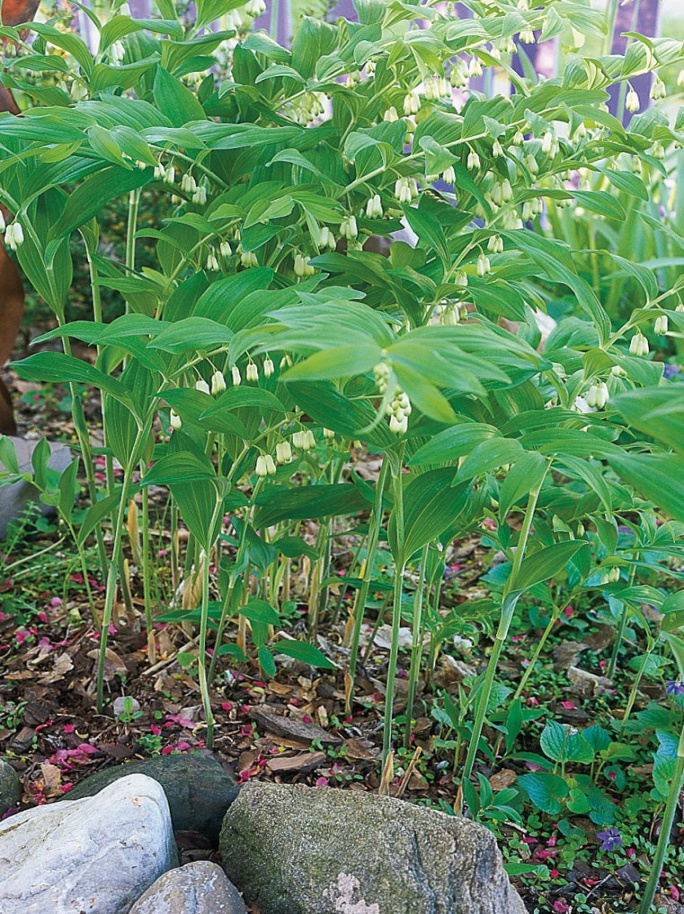
One of the most striking features of the Solomon’s Seal plant is its arching stems, which grow in a zig-zag pattern and are adorned with pairs of oval-shaped leaves. These stems can reach heights of up to three feet, creating a graceful and flowing silhouette in the garden. In late spring to early summer, the plant produces delicate white or pale pink bell-shaped flowers that hang beneath the stems like tiny lanterns. These flowers are followed by dark blue or black berries that add further visual interest to the plant.
The Solomon’s Seal plant is a shade-loving species that thrives in moist, well-drained soil. It can be found growing in woodlands, meadows, and along streams and rivers, where it forms dense patches of greenery that provide habitat for a variety of wildlife. In the garden, the plant can be grown in shady borders, woodland gardens, and under trees and shrubs, where its graceful form and delicate flowers can be appreciated up close.
Aside from its ornamental value, the Solomon’s Seal plant also has a long history of medicinal use. In traditional herbal medicine, the plant has been used to treat a variety of ailments, including inflammation, arthritis, and digestive disorders. The roots and rhizomes of the plant contain saponins, flavonoids, and other compounds that are believed to have anti-inflammatory and antioxidant properties. While more research is needed to fully understand the plant’s medicinal properties, it continues to be used in herbal remedies and supplements today.
In addition to its beauty and medicinal value, the Solomon’s Seal plant also plays an important ecological role in its native habitats. The plant provides food and shelter for a variety of insects, birds, and small mammals, including bees, butterflies, and songbirds. The berries of the plant are a food source for many wildlife species, while the dense patches of foliage provide nesting sites and protective cover.
Overall, the Solomon’s Seal plant is a truly remarkable species that embodies the graceful beauty of the natural world. Whether grown in a garden or observed in the wild, this unique plant never fails to captivate with its elegant form, delicate flowers, and rich history of traditional use. So take a moment to discover the elegance of the Solomon’s Seal plant and appreciate the beauty and wonder of nature in all its glory.
Embrace the Delicate Beauty of this Unique Flowering Plant
In the world of botanical beauty, there are few plants that can rival the graceful elegance of the Solomon’s Seal plant. With its delicate white flowers dangling like tiny bells from arching stems, this unique flowering plant exudes a sense of otherworldly charm that is truly captivating. From its slender, green leaves to its intricate rhizome root system, every part of the Solomon’s Seal plant seems to whisper of a mysterious and enchanting beauty.
One of the most striking features of the Solomon’s Seal plant is its distinctive flowers. These delicate blossoms, which appear in late spring or early summer, are arranged in clusters along the length of the plant’s arching stems. Each flower consists of six petals, which come together to form a bell-like shape that seems to chime softly in the breeze. The white color of the flowers adds to their ethereal quality, giving them a purity and innocence that is truly enchanting.
But the beauty of the Solomon’s Seal plant is not limited to its flowers alone. The plant’s leaves, which are long and slender with a graceful curve, add a touch of elegance to its overall appearance. These leaves are a rich shade of green, with a slightly glossy texture that catches the light and gives them a subtle sheen. When the sunlight filters through the canopy of a forest, where the Solomon’s Seal plant is often found, the leaves seem to glow with a soft, green light that is both soothing and uplifting.
In addition to its flowers and leaves, the Solomon’s Seal plant is also known for its unique rhizome root system. This intricate network of roots spreads out beneath the surface of the soil, forming a dense, interconnected web that serves as both a source of nourishment and a means of propagation for the plant. The rhizome roots of the Solomon’s Seal plant are also believed to have medicinal properties, with some traditional herbalists using them to treat a variety of ailments.
But perhaps the most captivating aspect of the Solomon’s Seal plant is the sense of grace and beauty that it exudes. From the gentle curve of its arching stems to the delicate sway of its flowers in the wind, this plant seems to embody a sense of natural elegance that is both timeless and enduring. When one encounters a stand of Solomon’s Seal plants in a woodland setting, it is hard not to be struck by the sheer beauty and tranquility that they evoke.
In conclusion, the Solomon’s Seal plant is a truly unique and enchanting flowering plant that exudes a sense of grace and beauty like no other. From its delicate white flowers to its slender green leaves and intricate rhizome root system, every aspect of this plant seems to speak of a mysterious and enchanting beauty that is both captivating and uplifting. Embracing the delicate beauty of the Solomon’s Seal plant is like stepping into a world of wonder and magic, where nature’s grace and beauty are on full display for all to see and appreciate.